Table of contents
Factories and utilities are racing to modernize the grid at the very moment electricity demand is rising again, pushed by data centers, electric vehicles, and heat pumps, and the mismatch is becoming a defining industrial story of this decade. Grid operators want smarter networks that can reroute power in real time, integrate renewables, and limit outages, yet manufacturers face long lead times, skills shortages, and supply bottlenecks. So the central question is no longer whether smart electric networks are necessary, but whether industrialization can scale fast enough to deliver them where and when they are needed.
Demand is surging, and the grid feels it
Everyone wants cleaner power, and everyone wants more of it. After years of relatively flat electricity consumption in several advanced economies, forecasts have flipped upward, driven by the electrification of transport and heating and by the explosive growth of compute. The International Energy Agency projected that global electricity demand would rise at around 3.4% per year through 2026, a pace above the 2015-2023 average, and it singled out industry, cooling, and data centers as major drivers. In the United States, the Department of Energy has warned that load growth is returning in regions that had planned for stagnation, while in Europe, ENTSO-E scenarios anticipate steep increases in peak demand as electrification deepens. The details vary by country, but the direction is shared: more power, more volatility, more need for control.
That volatility is the core problem. Solar and wind can deliver abundant energy, yet they are weather-dependent, and the grid must balance supply and demand at all times. Add distributed generation, behind-the-meter batteries, EV fast chargers, and the reality of extreme weather, and the grid becomes a system that cannot be managed with yesterday’s logic alone. The result is visible in congestion costs, curtailment, and rising connection queues. In parts of the United States and Europe, developers report waiting years for interconnection approvals; National Grid ESO in the UK, for example, has repeatedly highlighted the scale of its connection pipeline and the need for queue reform. These are not bureaucratic footnotes, they are symptoms of infrastructure that needs both more capacity and more intelligence.
Smart networks need hardware, not slogans
Software is essential, but the smart grid still hinges on physical equipment: switchgear that can isolate faults quickly, transformers and power electronics that handle bidirectional flows, and modular substations that can be deployed faster than traditional builds. Utilities increasingly talk about “self-healing” networks, automation at the feeder level, and digital substations, yet each of those capabilities requires components that must be engineered, tested, certified, and installed under strict safety rules. Even when the digital layer is ready, projects stall if the hardware supply chain cannot deliver on time.
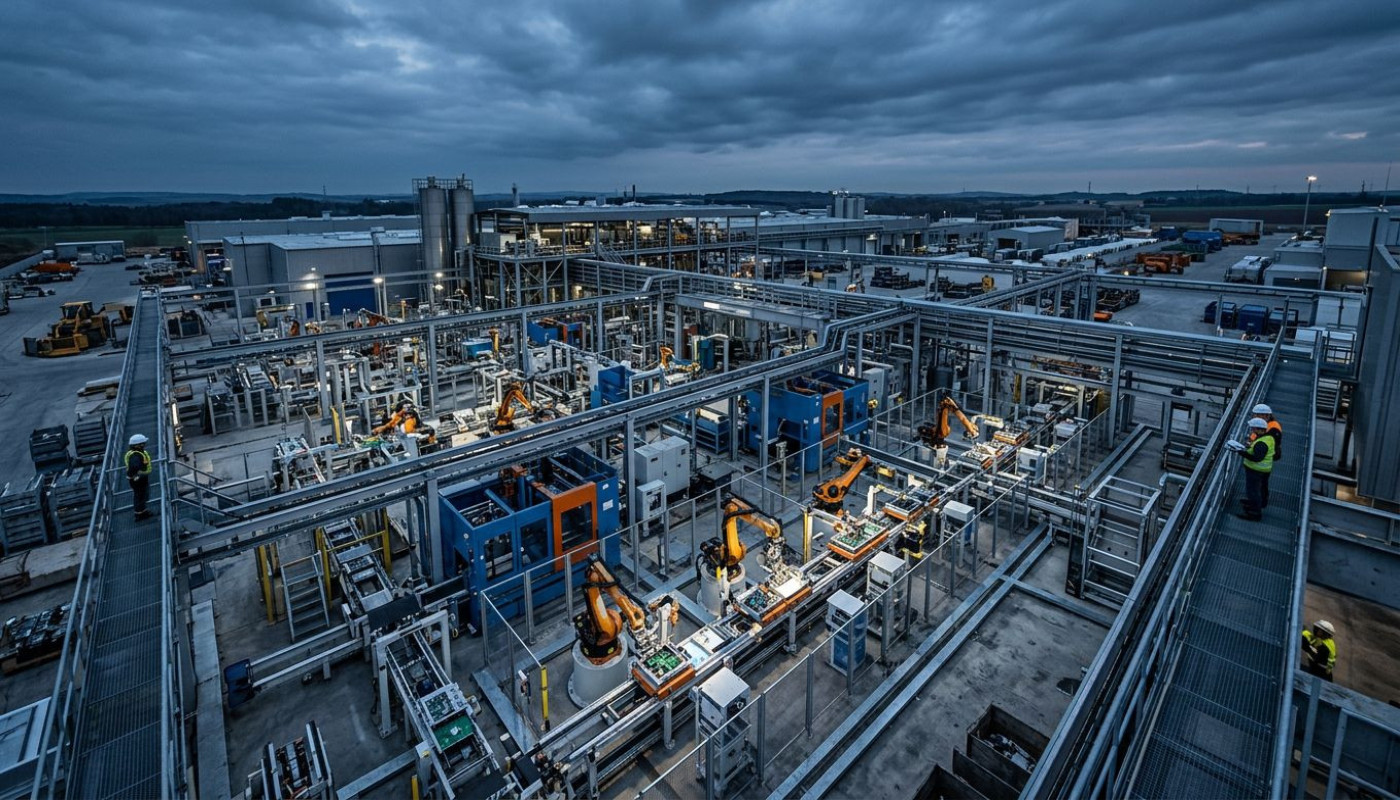
The constraint is often painfully mundane. Lead times for large power transformers have been reported by industry groups as stretching to years in some markets, and although those timelines vary by voltage class and region, the broader pattern is clear: manufacturing capacity has not expanded as fast as demand. Switchgear, protection relays, and specialized enclosures can also face delays when upstream inputs tighten, from copper and electrical steel to semiconductors. Industrialization, in this context, is less about futuristic prototypes and more about repeatable, high-quality production that can be scaled, with standardized designs, factory testing, and logistics that reduce on-site complexity. Solutions such as preassembled electrical skids and hub-based modularization are gaining attention because they shift work from constrained job sites to controlled manufacturing environments, where quality assurance is easier and schedules are more predictable, and that is precisely why approaches associated with Aventech have become part of the broader conversation about accelerating grid projects without compromising safety.
Industrial bottlenecks are now a policy issue
When grid delivery slows, it becomes an economic story, then a political one. Governments that subsidize renewables or electric vehicles quickly discover that permitting, interconnection, and equipment availability can turn incentives into frustration. In the European Union, the push to electrify industry and reduce dependence on imported fossil fuels has sharpened the focus on grid investment; the European Commission and national regulators have increasingly emphasized faster permitting and higher network spending. In the United States, the Inflation Reduction Act turbocharged clean-energy deployment, yet FERC and regional transmission organizations have had to confront the reality that connection queues and transmission planning are not keeping up with the pace of projects. The grid is no longer a background utility, it is a front-page enabler of industrial strategy.
Industrial capacity, however, is not rebuilt overnight. Expanding a transformer plant, qualifying new suppliers, or training high-voltage technicians can take years, and the same applies to testing laboratories and certification bodies that must validate equipment for safety and interoperability. Skilled labor is a quiet chokepoint: electricians, protection engineers, commissioning specialists, and high-voltage jointers are in short supply in many markets, and aging workforces intensify the problem. Meanwhile, supply chains are being rethought for resilience, with more regional sourcing and inventory buffers, yet those moves can raise costs in the short term. Policymakers are starting to treat these industrial bottlenecks as part of energy security, which is why we see more attention to domestic manufacturing, strategic materials, and faster procurement frameworks, but the policy cycle and the factory cycle do not always align.
Speed will come from standardization and modularity
If there is a practical pathway to closing the gap, it runs through standardization. Utilities historically customized substations and distribution upgrades to local conditions, and customization can be justified, but it also slows delivery. Standard designs, approved component lists, and repeatable architectures can cut engineering time and de-risk procurement, and they also make it easier for manufacturers to invest in scalable production lines. Digitalization helps here too: when protection schemes, communications protocols, and monitoring systems are standardized, commissioning becomes faster, and operators gain better visibility across fleets of assets rather than one-off installations.
Modularity adds another layer of acceleration. Factory-built modules, whether for medium-voltage distribution, control rooms, or integrated power skids, reduce on-site work, limit weather-related delays, and improve quality through routine testing before delivery. That matters because grid construction often happens in constrained environments, near live networks, under tight outage windows, and with stringent safety constraints. The industrial logic is familiar from other sectors: build more in controlled conditions, then assemble quickly on site. The trade-off is upfront coordination, because modular projects demand earlier design decisions and tighter interfaces between civil works, electrical equipment, and digital systems, yet the payoff can be shorter timelines and more predictable budgets. For utilities and large energy users trying to connect new loads quickly, from EV depots to data centers, that predictability can be more valuable than marginal savings on bespoke designs.
From planning to procurement: what readers should watch
Utilities will talk about smart grids for years, but the near-term markers of progress are concrete. Watch transformer and switchgear lead times, watch interconnection queue reforms, and watch whether standardization spreads across regions rather than staying trapped in pilot projects. Also watch how quickly workforce initiatives scale, because the best hardware cannot commission itself. The smart grid is arriving, but its pace will be set by factories, training centers, and procurement rules as much as by algorithms.
How to move faster without wasting money
Plan early, and lock designs sooner; late changes are where projects bleed time and cash. Build a realistic budget that includes testing, commissioning, and cybersecurity, then ask about delivery slots before signing. In many countries, grants or regulated cost-recovery can support grid upgrades, and large users should explore local connection incentives and demand-response programs while booking capacity months ahead.
Similar articles

Unveiling the Hidden Dangers of Vehicle Emissions: A Call to Action

Segway Scooters: The Future of Personal Transportation

Unmasking the Hidden Dangers of Stealth Car Security
